Release notes
Ability to conduct concurrent risk assessments for a single vendor

Annie Luu February 28, 2024
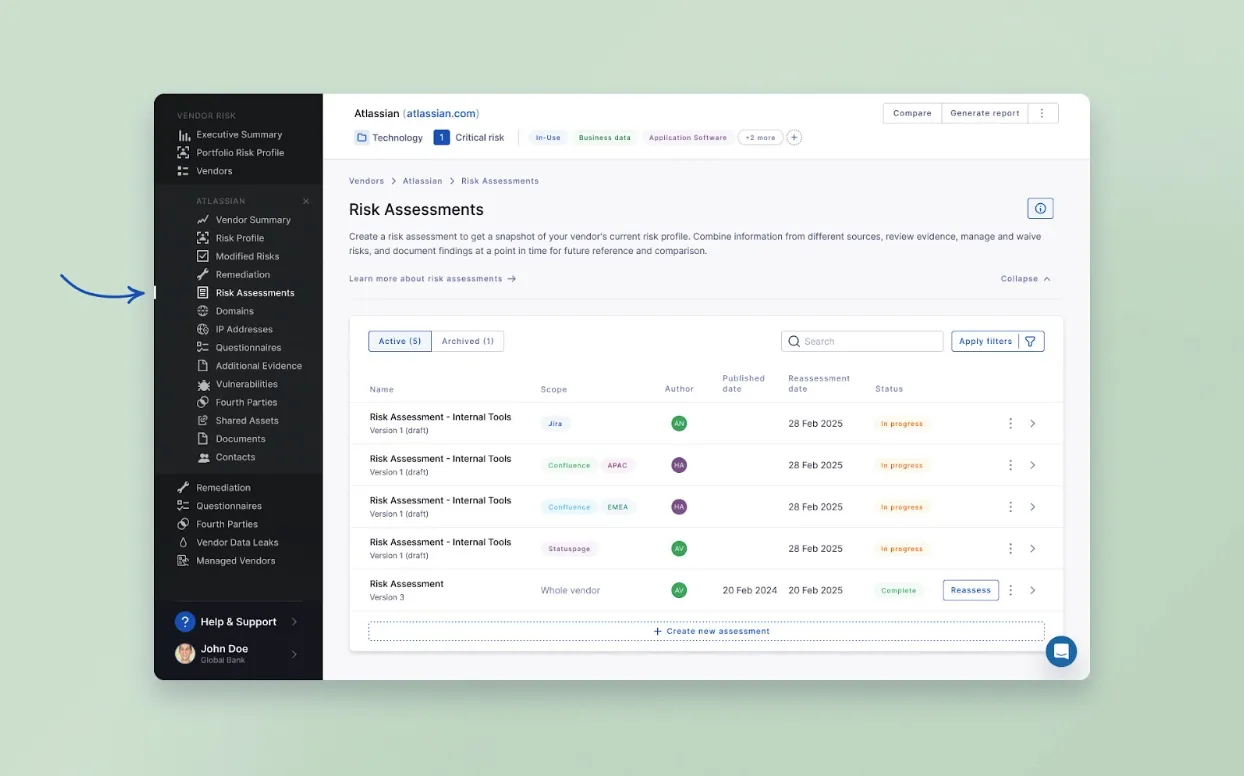
To give you more flexibility when conducting risk assessments, we’ve added the ability to create multiple concurrent risk assessments for a single vendor. You can now add custom names and scope for each risk assessment, to correspond to the specific purpose and scope of each assessment, such as product or region-based risk assessments.
To learn more about vendor risk assessments and these changes see How to complete a risk assessment.
We’re consolidating our existing tools to answer security questionnaires, respond to requests for documentation and choose what to share in your Shared Profile under one banner: the UpGuard Trust Exchange. Plus, we’re introducing a content library, where you can manage and reuse previously uploaded documents.
To extend the visibility into your asset inventory in BreachSight, we’ve added a new section called Detected Products that displays in depth information about the software and other products used on your domains and IPs.
This information extends what is already available in Vulnerabilities – an inventory of software products with known vulnerabilities– to show products in use that may not yet have CVEs. Having this information allows you to audit for unapproved software and respond more quickly when a new vulnerability is discovered for one of the products you use.
When malicious domains impersonating your brand are detected by the Typosquatting module, the next step is to remediate the risk by contacting the domain registrar and reporting the abuse. You can now go straight to the page of the registrar or other relevant internet authority from Typosquatting to begin the takedown process.