Release notes
Enhanced Security Profile reporting and customization

Mark Barber December 17, 2025
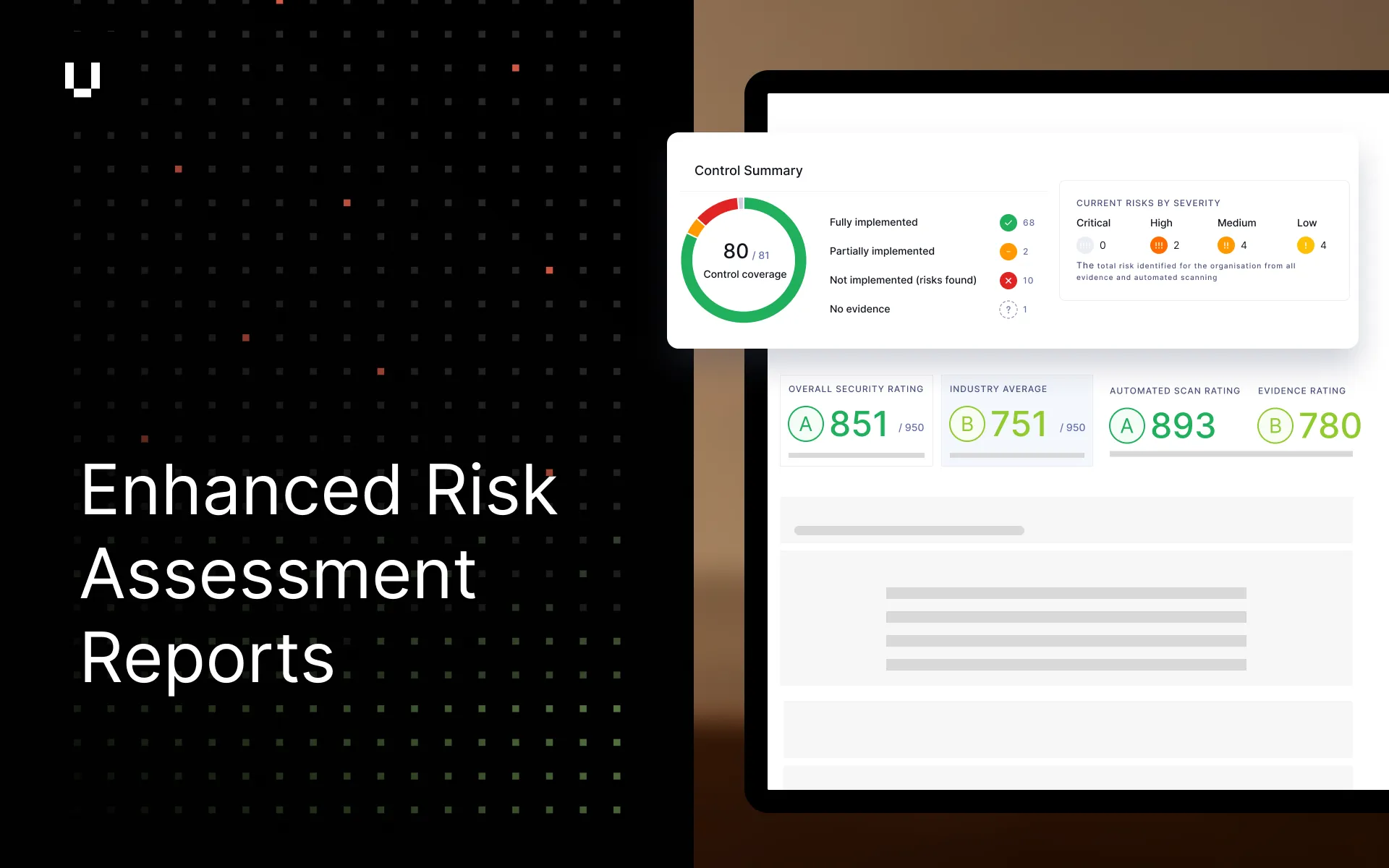
We’ve updated our Security Profile Risk Assessment reports to give users more flexibility and consistency. Users can now customize the Assessment Summary section to better tell their risk story by including the summary of control implementation statuses (implemented, partially implemented, not implemented). We’ve also aligned our PDF and Word reports to now include the Risk Summary and Control Summary directly in the report, ensuring users have the data they need, in the format they need.
We have updated Additional Evidence to allow users to select past dates for expiration. This flexibility ensures that users can accurately record and manage evidence that has a retrospective expiry date.
Following CVE-2025-55182, a critical remote code execution vulnerability affecting React Server Components, we’ve improved our ability to detect Next.js applications. Because Next.js relies on React Server Components, affected versions of Next.js are also impacted by this vulnerability. Customers can now identify whether their Next.js applications are running vulnerable versions and take action to upgrade to patched releases.
Our social media coverage has been expanded to include X (formerly Twitter) to detect security-relevant signals, such as impersonation, threats, and coordinated activity, using the same automated triage and workflows used across other Threat Monitoring sources.
We have enhanced the Audit Log to include granular details (like document names and types) when assets are added or removed from Trust Centers. We have also added Audit Log entries for the creation and deletion of Trust Centers. This update ensures that all lifecycle events of a Trust Center are recorded, providing users with comprehensive oversight of Trust Center management activities.