Solving CISOs’ Toughest Security Challenges With UpGuard’s Risk Operations Center
.jpeg)

What do most CISOs have in common today? They’re facing a wave of relentless risk and AI-scaled threats, more human error, and leaner teams.
- 87% of organizations reported an AI-driven attack in the last year.
- 68% of data breaches in 2024 are attributed to human error.
- 4.8 million cybersecurity roles remain unfilled, as global skill gaps widen.
Many security teams are reaching their breaking point, and it’s no surprise. A constant flood of signals, lagging response times, and growing gaps for attackers to exploit don’t leave much room for anything but firefighting.
This article looks at the pain points plaguing lean security teams worldwide, and how the UpGuard Risk Operations Center helps solve them.
Risk Operations Center vs. a CISO’s toughest challenges
You already know AI-driven attacks are rising, human risk is higher than ever, and regulatory compliance goalposts keep moving. CISOs are contending with noise overload, a lack of clarity, delayed responsiveness, verification gaps, and too many dashboards to make sense of it all.
You don’t need another tool to add to your stack, but a single source of truth. The Risk Operations Center provides precisely that. One platform to safeguard your organization and recalibrate your team to focus on building a security-first environment
Discover: Seeing past the signal fog
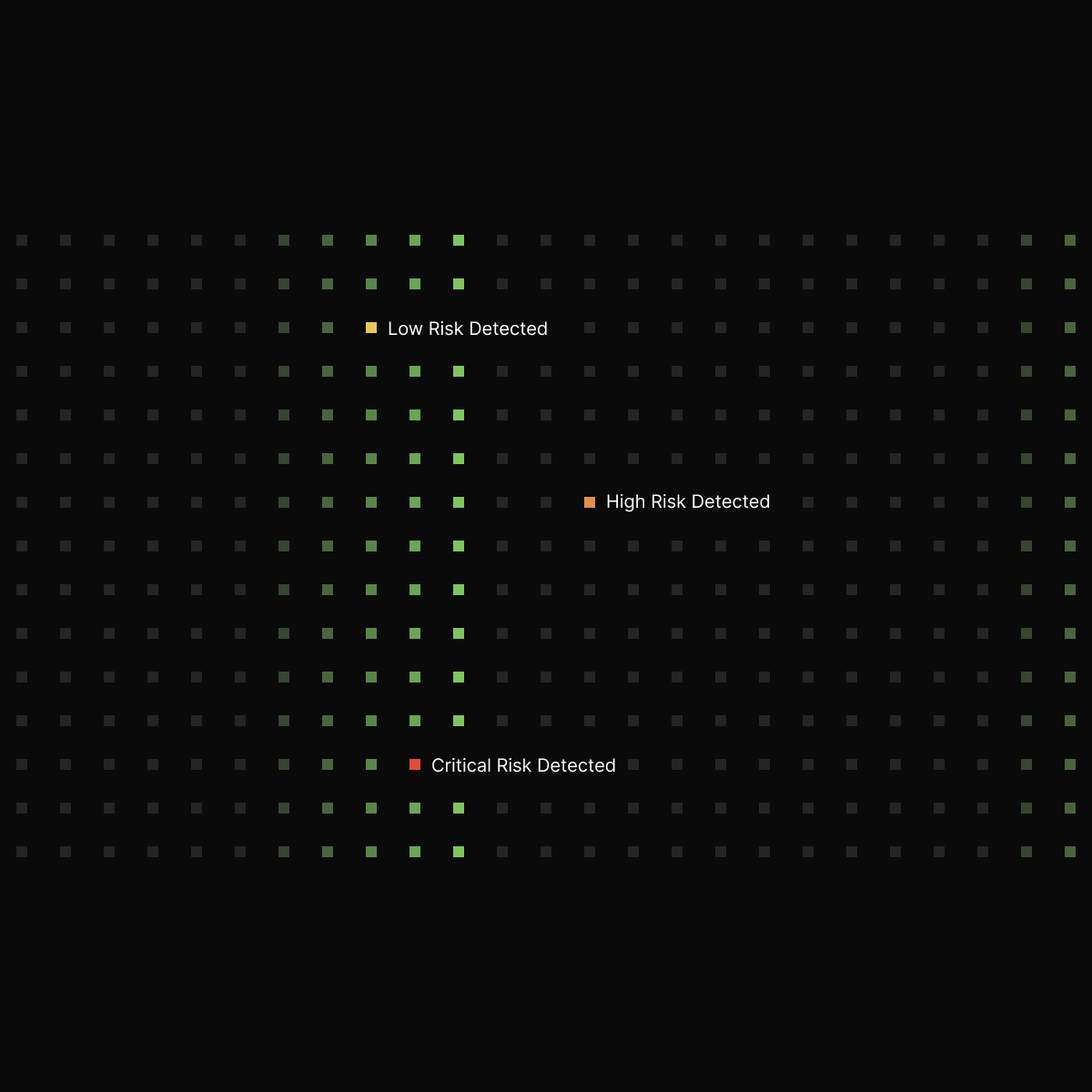
With an average of 4,484 daily threats, many CISOs find it impossible to understand their risks clearly. The fluidity of the threat landscape complicates this further.
Take the CISO of a large FMCG (fast-moving consumer goods) distributor. She stares at her dashboard and the lengthy post-mortem report in front of her. Her team uses a dozen disconnected tools to monitor their expanding digital ecosystem, but something has clearly been missed because they recently suffered an expensive data breach.
A single red dot flashed, a critical alert about a new vulnerability, and it wasn’t caught in time. She must explain to the board how they lost sensitive data before they knew they were under attack.
This all-too-familiar scenario stems from alert fatigue and a lack of context, where teams drown in information without clear, actionable insights. Multiple tools may seem to cover all your bases, but they don't account for the gaps that let attackers through before you can deploy a patch.
This is where UpGuard’s platform changes the equation with Compounding Intelligence. Billions of signals compound into accurate, prioritized risk on the surface you’re watching, so you move from hundreds of flickering lights to a clear view of what matters most. You see the unseen, bringing the picture back into focus and turning a constant stream of alerts into decisions you can act on.
Act: closing the gap between detection and response
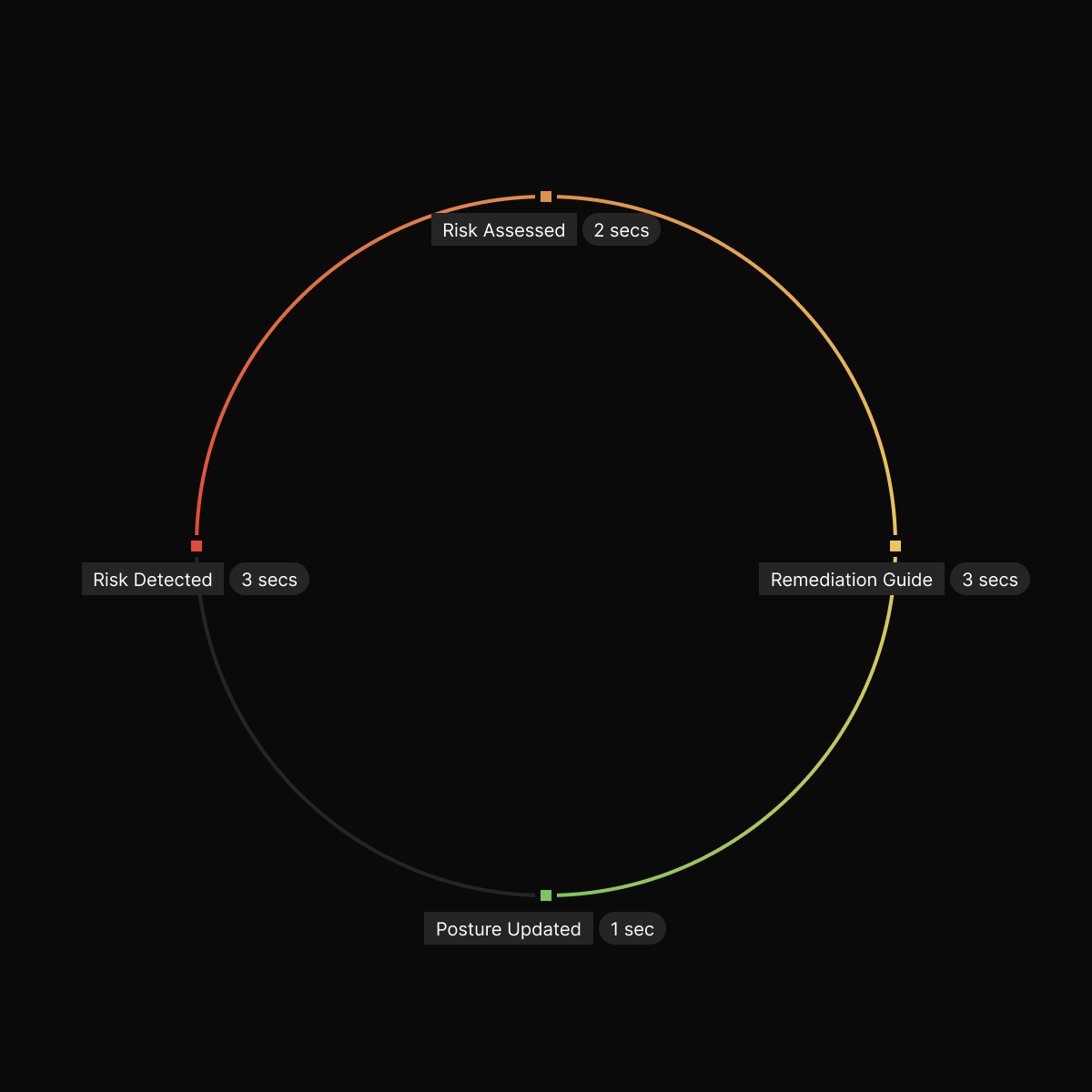
The wider the gaps between risk detection, identification, and treatment, the harder it is to secure your organization effectively.
Let’s visit another CISO, who heads up the IS team at a fast-growing SaaS tech company. The company is projected to hit all its financial targets this year, but has held back on hiring more personnel, leaving its team stretched thin.
An employee from another department receives a phishing email and reports it to IS. But by the time the IS team gets to the logged ticket, several accounts have already been compromised, with sensitive information being taken and sold on the dark web.
That’s detection latency. By the time teams investigate threats, the damage has already been done. Lean teams battle manual data correlation and a queue of what looks like higher-priority work, all while real enterprise-level threats wait their turn.
Breach Risk’s AI Threat Analyst removes that bottleneck. It triages threat signals, dismisses 68% of them as noise, and hands over the rest with plain-language context, so your team spends time deciding instead of collecting. When stolen credentials from that phishing email surface on the dark web, the alert arrives tied to the employee who lost them. That’s the difference between acting in minutes and acting in days, and it shrinks the risk window a threat actor has to do damage.
Prove: making compliance continuous
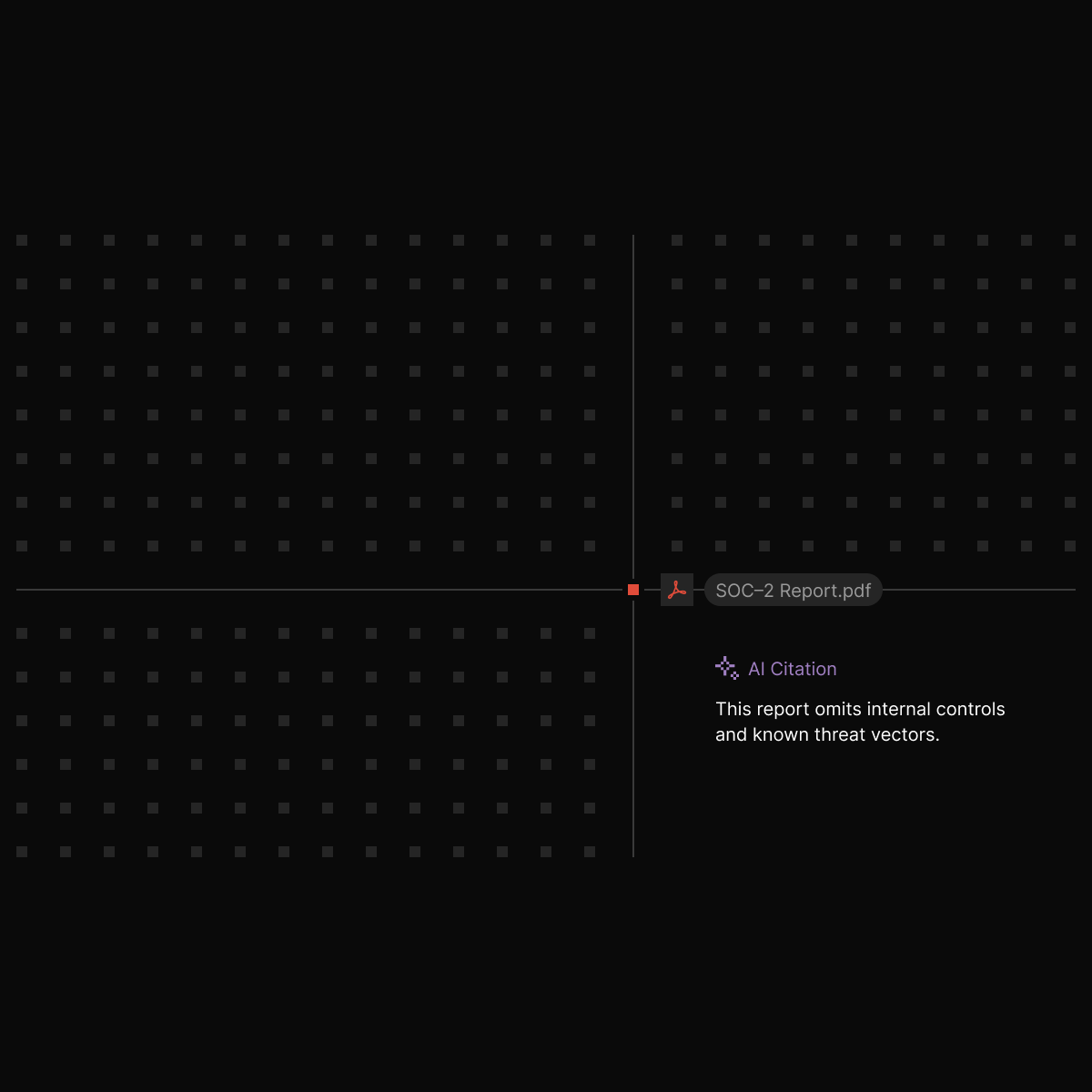
Point-in-time audits create a false sense of security. Your posture changes every day, and breaches go unnoticed for months. IBM’s Cost of a Data Breach Report 2026 puts the global average time to identify a breach at 183 days
Another CISO is the IS team lead at a highly acclaimed healthcare organization. He understands better than most how sensitive the data his team handles is and what’s at stake if it leaks.
The team just passed its annual HIPAA audit, but he grows more concerned every day as cybersecurity attacks become more aggressive. He knows their posture is constantly changing, and a breach could happen at any time. Their compliance report is already outdated by the time it lands on his desk.
Snapshots in time make for stale compliance. The Risk Operations Center replaces that with continuous evidence. Breach Risk monitors your external posture continuously and collects timestamped evidence for frameworks including HIPAA, SOC 2, and ISO 27001, so the record is current when the auditor asks. Your security rating and its history show whether you’re getting safer, which is the question every board asks.
Why connecting the dots matters
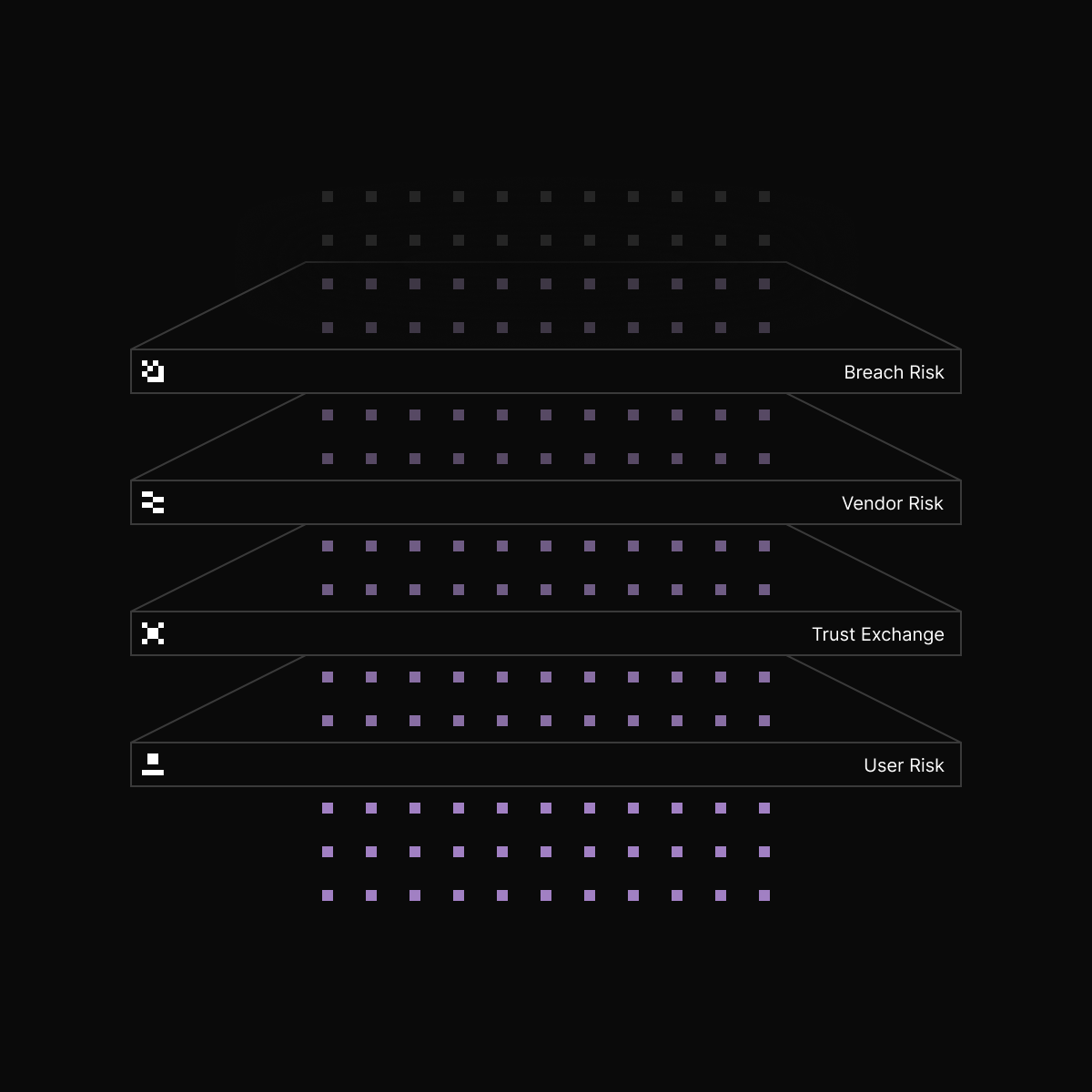
The average enterprise is juggling 83 different security tools. CISOs are left connecting the dots in the dark because clarity and context are scarce.
Most teams work reactively, manually sifting through data scattered across a dozen dashboards and wondering whether any of those tools are earning their keep. The reality breeds inefficiency and chaotic workflows.
A connected platform changes what each piece of data is worth. UpGuard Grid, the data layer beneath the Risk Operations Center, gives every signal from every domain (vendors, attack surface, and workforce) meaning in context.
A vendor breach reframes your own exposure. A leaked credential arrives already tied to the employee and the supplier that held it. That’s Compounding Intelligence, connecting the next domain to sharpen the picture again.
Let’s recap: To read more about how intelligent technology works, check out our previous article, Compounding Intelligence: The Grid Behind UpGuard’s Risk Operations Center.
Doing more with less
The sheer volume of alerts is a problem in itself. Add in endless responsibilities and a landscape that won’t sit still. It’s no surprise that 98% of security professionals reportedly work beyond their contract hours, and the average CISO clocks in an additional nine hours per week.
Take another CISO at a large consultancy, facing a hiring freeze. His burnt-out team struggles to keep pace with AI-driven attacks that evolve faster than they can respond.
Most of their time goes to writing report after report, chasing vendors who won't give a straight answer, and manually triaging alerts. He knows the team needs relief from the grunt work, but stopping to fix the process feels like a risk he can't afford. He doesn't know how to ease the pressure without creating a new one.
CISOs are under constant pressure to do more with less, and to do it well. It’s hard to know your next move when it feels like your team’s whole job is putting out fires. Reactive, repetitive, low-value work is what drains a lean team dry.
This is exactly what UpGuard’s AI Agents are built to absorb. AI for Vendor Risk chases vendor follow-ups automatically, Risk Automations turns a flagged risk into a ticket, and instant risk assessments give you clarity in seconds.
The Risk Operations Center: A new way to think about cyber risk
CISOs are facing more change and more risk than ever, and a single vulnerability can threaten the whole organization. You need a way to see it, act on it, and verify it’s under control. Something that helps you see the unseen, act in minutes, stay continuously assured, and get out from under the grunt work that’s draining your team.
The Risk Operations Center does exactly that, built around three connected outcomes:
- Discover: Find every risk across vendors, attack surface, and workforce, connected instead of scattered across a dozen tools.
- Act: Let AI Agents handle the repetitive work, so your team closes gaps in minutes instead of days.
- Prove: Show risk reduction with continuous, audit-ready evidence.
For a CISO running a lean team, that means one platform instead of five tools, AI doing the repetitive work, and proof of improvement that boards, auditors, insurers, and customers accept. Start with the product that solves your most pressing problem, and expand as the value compounds.

.jpg)