Good Security Rating? Your Dark Web Exposure Says Otherwise


Ask a security leader how secure their company is, and most will point to a number. A rating, maybe a grade, or a score out of some maximum that a vendor calculated for them. That number only measures half the problem. It tells you about your infrastructure: your email configuration, your encryption, what's visible on the internet. It tells you much less about whether your employees' credentials are already exposed to an attacker. That second point is what a dark web scan answers, and it's worth knowing before you assume a good rating means you're covered.
The average company looks fine. And that's the problem.
Across the ASX 200, the average security rating in 2025 was a B, up slightly from the previous year. UpGuard's ASX 200 report revealed critical insights beyond security ratings: in every risk category measured, up to a third of companies ended the year worse off than they started. And 10% of the companies closed 2025 with a verified, active infostealer infection, meaning malware had harvested working credentials off a real device tied to that company. Not an old password in a five-year-old dump. A credential that still works, right now.
A good security rating and an active infostealer infection often coexist. While a rating evaluates your overall defenses, an infection reveals that an attacker has already bypassed them. For instance, stolen session cookies allow attackers to bypass multi-factor authentication entirely, making them appear as a legitimate user logging back in.
Security ratings change, and your monitoring should too
The same research found that security postures across the index tend to spike right after a major incident makes headlines, then quietly slide back down once the news cycle moves on. It happened after the CrowdStrike outage in 2024 and again after last year's Salesforce attacks. Proactively monitoring your security posture, rather than waiting for external incidents to trigger a review, closes the gaps that single audits or periodic tests might miss.
How well does your security measure up?
An industry average is useful right up until the moment you need your own number. It can't tell you whether your company is already carrying a live infection, nor can it tell you what's circulating out there that's tied to your domain. A dark web scan can.
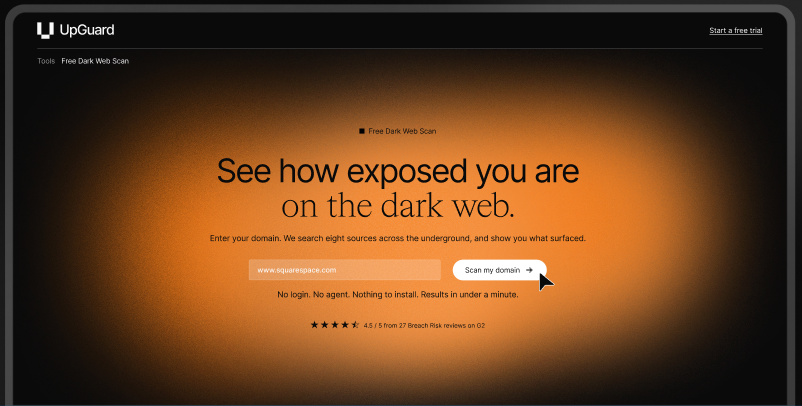
Don’t wait. Run your free scan and find out where you stand.
.jpg)
